How to Clean a Bike Properly
By Cal WhitmoreUpdated 8 min read
The short answer
Work top to bottom and leave the drivetrain until last. Never use a pressure washer — it drives water and grit past the bearing seals in your hubs and bottom bracket. Dry the bike, then re-lube the chain.
Key takeaways
- Pressure washers turn a wash into a bearing rebuild. This is the single most expensive mistake in bike cleaning.
- Top to bottom, drivetrain last, so you are not dragging chain grime back over a clean frame.
- Separate brushes for frame and drivetrain. Once a brush has touched the chain it is a drivetrain brush forever.
- Always re-lube the chain after washing. Water displaces lubricant from inside the rollers.
A clean bike is not vanity. Grit is abrasive, and the places it accumulates — the chain, the sprockets, the seals around every bearing — are the places where abrasion costs money. Washing a bike is preventative maintenance that happens to look nice.
It is also easy to do damage, and almost all of that damage comes from one thing: putting water somewhere it cannot get out of.
The pressure washer problem
The same applies, to a lesser degree, to a hose on a jet setting held close to a hub. A gentle flow is fine. A focused jet aimed at a bearing is not.
What you need
| Item | Use | Notes |
|---|---|---|
| Two buckets | One soapy, one rinse | Stops you putting grit back on the frame |
| Soft brush or sponge | Frame, forks, saddle | Never use this on the chain |
| Stiff brush | Chain, cassette, chainrings | Keep it separate, permanently |
| Narrow detail brush | Between sprockets, around the derailleur | An old toothbrush works |
| Bike wash or dish soap | General cleaning | Dilute; avoid strong degreasers on the frame |
| Degreaser | Drivetrain only | Keep it off brake rotors and pads |
| Rags | Drying and chain wiping | More than you think |
| Chain lube | After drying | The job is not finished without it |
The order to work in
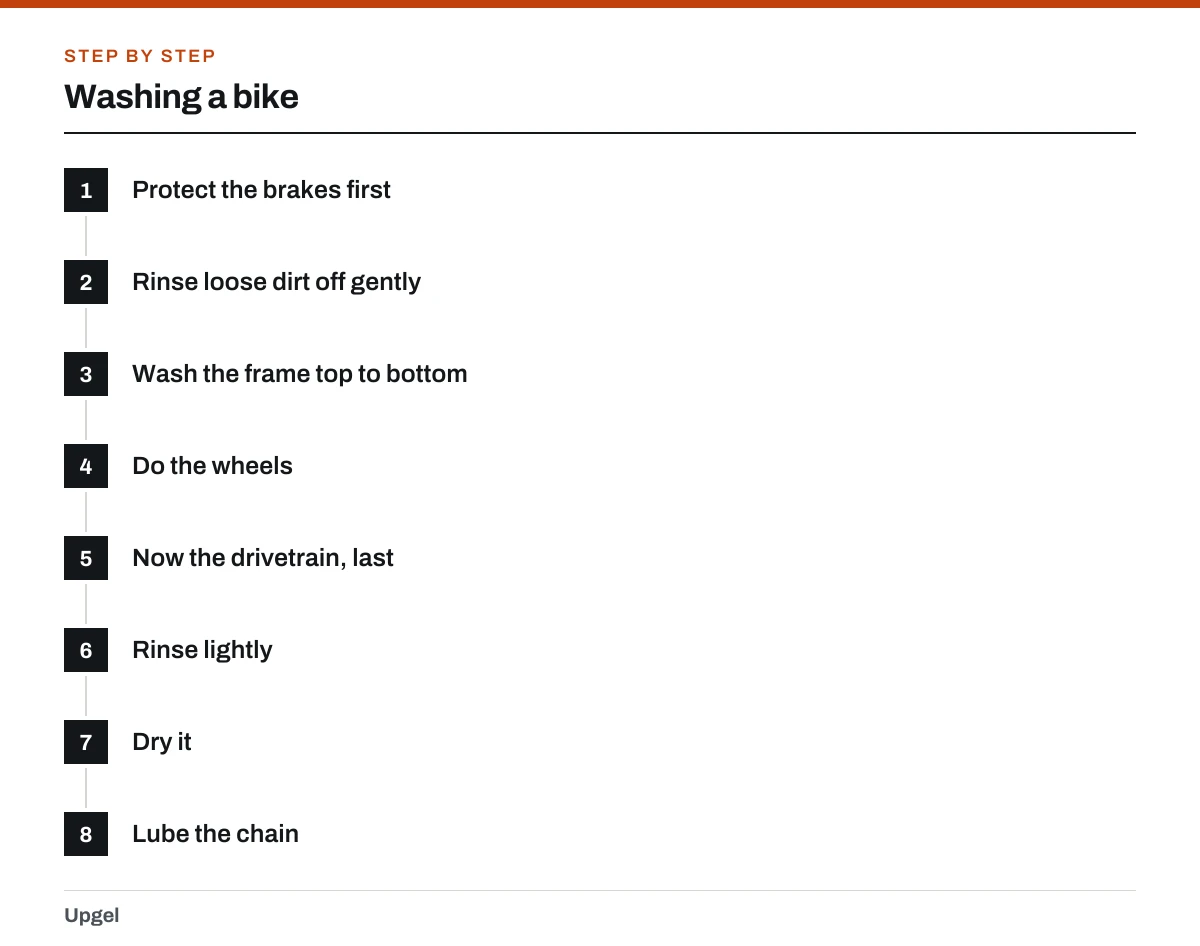
Washing a bike
Protect the brakes first
On disc brakes, degreaser or soapy water on a rotor or pads means contaminated pads and squealing. Either remove the wheels and bag the rotors, or be scrupulous about keeping cleaner away from them — see cleaning brake rotors.
Rinse loose dirt off gently
A low-pressure hose or a watering can. You are floating off grit, not blasting it. Removing grit before you touch the paint is what prevents swirl marks.
Wash the frame top to bottom
Soapy water and the soft brush. Start at the bars and saddle, work down to the bottom bracket. Gravity does the rest.
Do the wheels
Both sides of the rims, the spokes and the hub bodies. On rim brakes, clean the braking surface properly — it makes a real difference to braking.
Now the drivetrain, last
Degreaser on the chain, cassette and chainrings, with the stiff brush. Backpedal to run the chain through. Full detail in cleaning a bike chain and cleaning a bike cassette.
Rinse lightly
Enough to carry the soap and degreaser away. Keep the flow away from hubs, headset and bottom bracket.
Dry it
A rag over the frame, and backpedal the chain through a dry rag until it stops coming away grey. Bouncing the bike gently sheds water from crevices.
Lube the chain
One drop per roller, backpedal, wait, then wipe the outside off firmly. Washing strips lube; skipping this step means a rusty chain by tomorrow.
What to avoid
- Pressure washers. Covered above, and worth repeating.
- Household degreasers and solvents on the frame. They strip wax, can dull paint and attack decals.
- Degreaser near disc brakes. Contaminated pads usually cannot be rescued and need replacing.
- Washing in direct sunlight. Soap dries on the paint and leaves marks.
- Turning the bike upside down, if it has hydraulic disc brakes — air in the lines can migrate towards the caliper. Use a stand or lean it against a wall.
- Leaving it wet. Standing water in bolt recesses and around the seatpost is where corrosion starts.
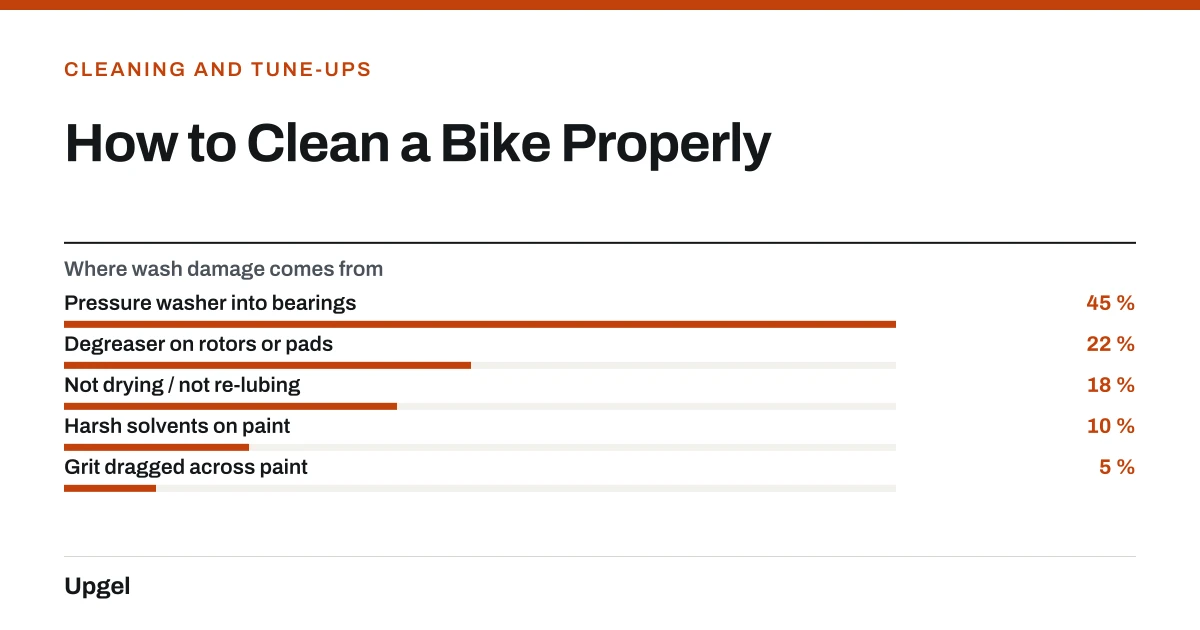
- Pressure washer into bearings45%
Hubs, bottom bracket, headset.
- Degreaser on rotors or pads22%
New pads required.
- Not drying / not re-lubing18%
Surface rust within a day.
- Harsh solvents on paint10%
Dull finish, lifted decals.
- Grit dragged across paint5%
Rinse before you touch it.
Finishing off
A wash is the best possible moment to inspect the bike, because everything is visible for once. Look for cracks around welds and joints, cuts in tyre sidewalls, frayed cable strands, worn brake pads, and any bolt that looks like it has moved. Spin both wheels and check for rim wobble and for play in the hubs.
It is also the right moment for a proper check-over, which is set out step by step in tuning up a bike. Ten minutes of inspection on a clean bike catches most of the things that would otherwise strand you.
Frequently asked questions
Can I use a pressure washer on my bike?
No. It forces water and grit past the bearing seals in the hubs, headset and bottom bracket. The bike looks clean and the bearings are damaged; the symptoms appear weeks later as roughness and play.
What can I use to clean my bike at home?
Warm water with dish soap or a dedicated bike wash, a soft brush for the frame and a separate stiff brush for the drivetrain. Use degreaser on the chain and sprockets only, keeping it away from brakes.
How often should I clean my bike?
A full wash every few weeks for regular riding, and after any particularly wet or muddy ride. More valuable is wiping and re-lubing the chain after every wet ride, which takes two minutes.
Do I need to lube the chain after washing my bike?
Yes, always. Water displaces lubricant from inside the chain rollers, and an unlubricated chain will surface-rust within a day. Dry the chain first, then apply one drop per roller and wipe the excess off.
Sources
- Chains — Sheldon Brown
Supports: That water displaces lubricant from inside chain rollers and that re-lubrication after washing is required.
- Bottom Bracket Sizing — Sheldon Brown
Supports: Bottom bracket construction and the bearing interfaces vulnerable to water and grit ingress.
- Bicycle Brakes — Sheldon Brown
Supports: That contamination of braking surfaces by oils and degreasers impairs braking and usually requires pad replacement.